


Markdown
Markdown is supported for resource descriptions, relation descriptions, sequence step descriptions, and perspective notes. Markdown allows you to add bold, italicized, code text and code blocks, insert links, add headers and bullet points, and add links to perspectives.
The following examples show how markdown can be added to a resource’s description.
| Yaml | Result |
|---|---|
Bold Text- name: Resource A subtitle: A Resource description: This description has **bold** text |
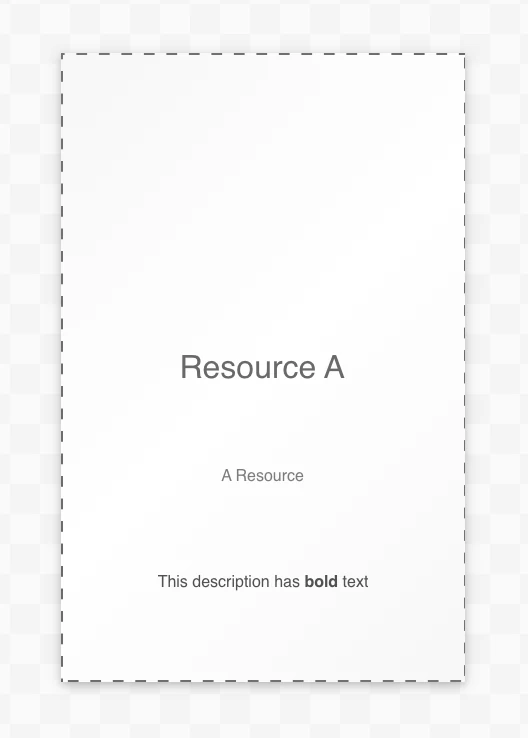
|
Italicized Text
- ...
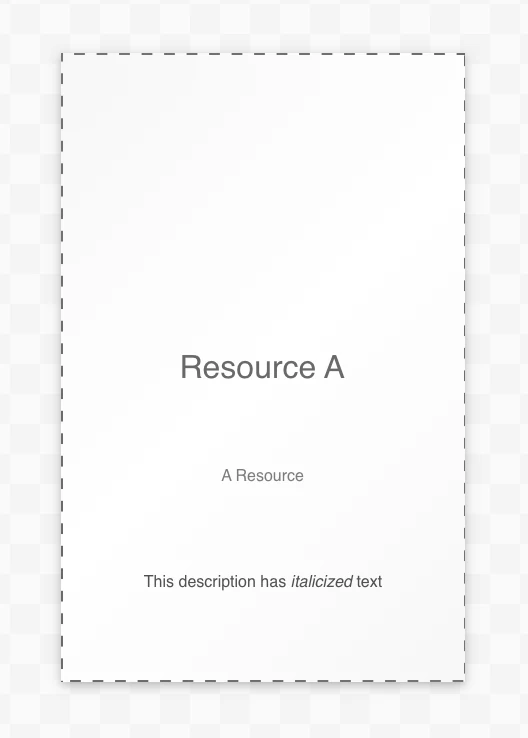
  description: This description has *italicized*
  text
|
|
Code Text (Inline)
...
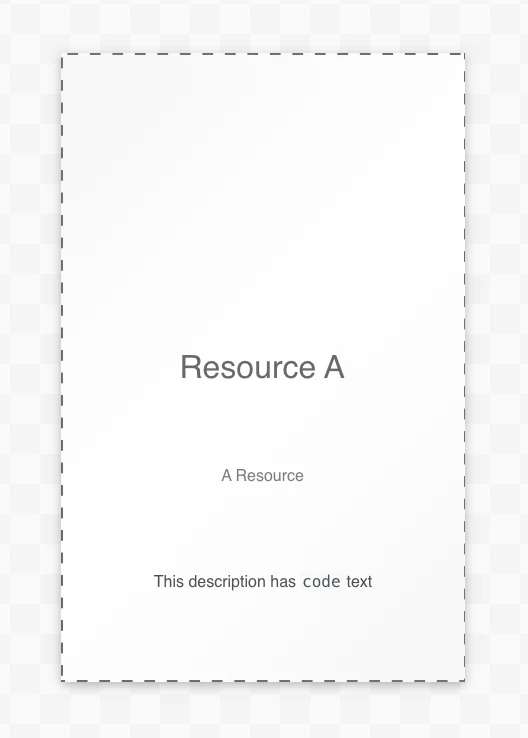
  description: This description has `code` text
|
|
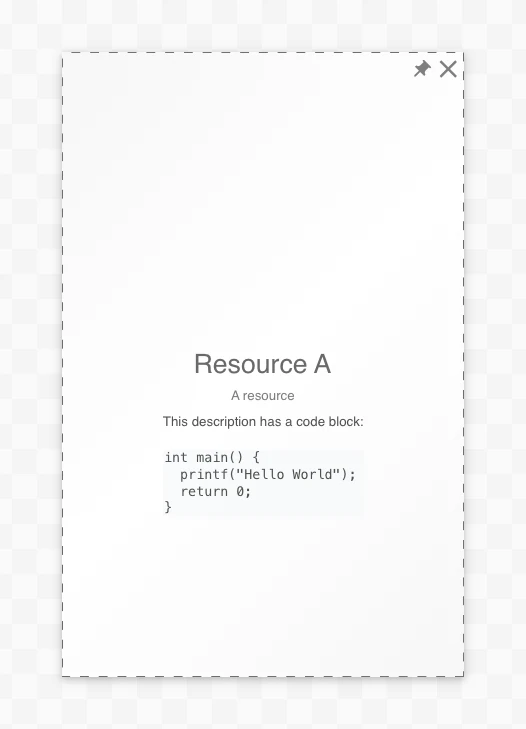
Code Text (Block)- ... description: |- This description has a code block: ``` int main() { printf("Hello World"); return 0; } ``` |
|
External Links
- ...
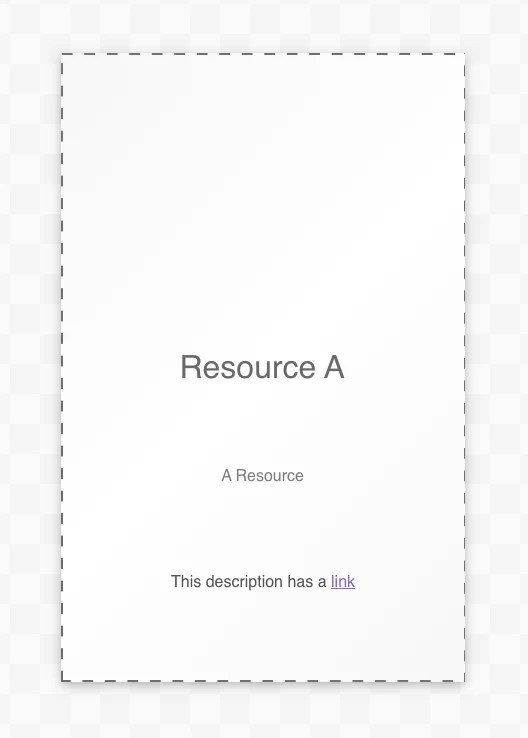
  description: This description has a
        [link](https://www.ilograph.com)
|
|
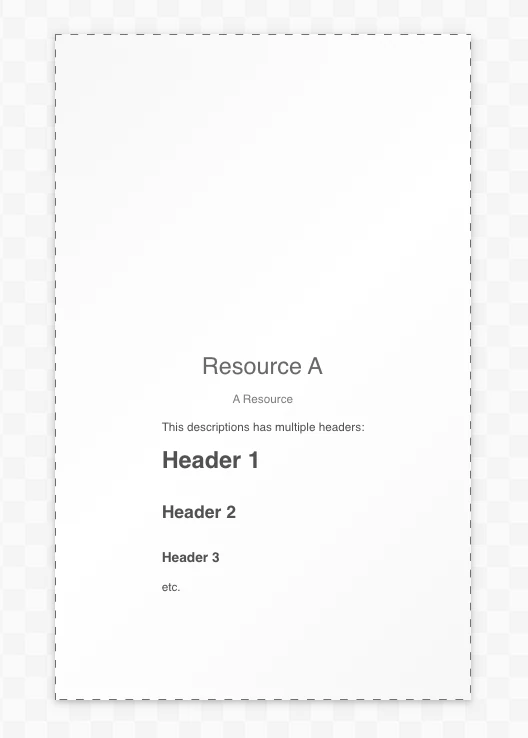
Headers- ... description: |- This descriptions has multiple headers: # Header 1 ## Header 2 ### Header 3 etc. |
|
Lists- ... description: |- This descriptions has a bulleted list: - Item 1 - Item 2 - Item 3 |

|
Internal Links to a Perspective
- ...
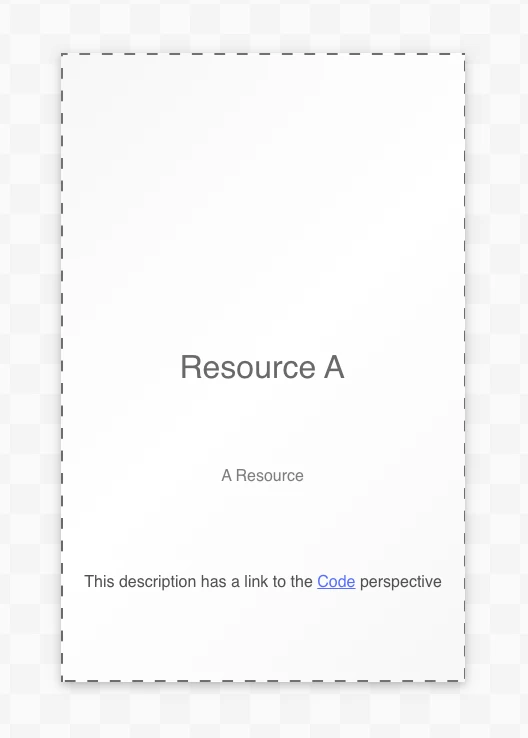
  description: This description has a link to
  the [Code](#Code) perspective
Internal Links to a Subsequence
- ...
  description: This description has a link to
  the [Code](#Code/SubequenceName) perspective
|
|
All special characters used in markdown can be escaped with a backslash (\) character.
While these examples show markdown used in resource descriptions, keep in mind that markdown can also be used in perspective notes, walkthroughs, and relation and sequence step descriptions.